
A double horseshoe arch
Two arches with a space between to trap anyone entering — Andalusi defensive design.
Palickap — CC BY-SA 4.0 · Alberto-g-rovi — CC BY 3.0 · AndyVolykhov — CC BY-SA 4.0 · AndyVolykhov — CC BY-SA 4.0
One of the gates of Granada's Islamic wall, standing in the upper Albaicín, among the oldest surviving parts of the city's fortifications. It dates to the eleventh century — the Zirid period, two centuries before the Nasrid kingdom of Granada arose. That makes it far older than the Alhambra itself: the Alhambra every visitor comes for was built from the thirteenth century onwards, and this gate already stood. It is built of brick and stone with a double horseshoe arch, the usual Andalusi form for a defensive gate: an outer arch and an inner one with a space between where anyone entering could be trapped. A few steps away stands the Puerta de Elvira, the larger and better-known gate that was the city's main entrance from the north. The gate is outdoors, free and always open, and there is nothing to visit inside — you stand in front of it for a few minutes on your way up or down through the Albaicín. The quarter around it climbs steeply on narrow stone streets, and walking it is the real visit.
Two arches with a space between to trap anyone entering — Andalusi defensive design.
From the Zirid period, before the kingdom that built the Alhambra existed.
The larger, better-known gate a few steps away, once the city's main entrance.
Upper Albaicín, Granada
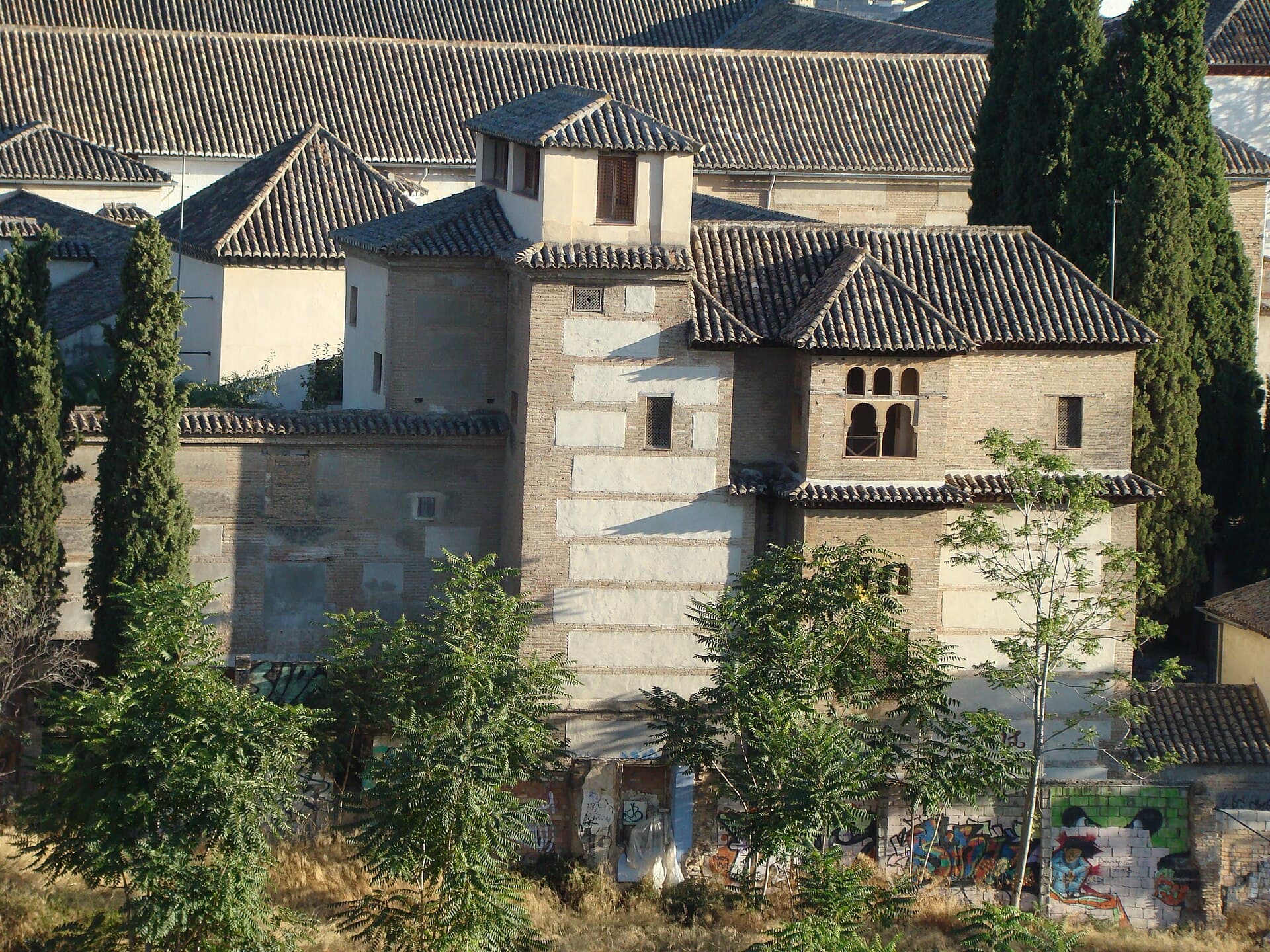 Palacio de Dar al-HorraDar al-Horra is a fifteenth-century Nasrid house at the top of the Albaicín, and1 minute walk4.3
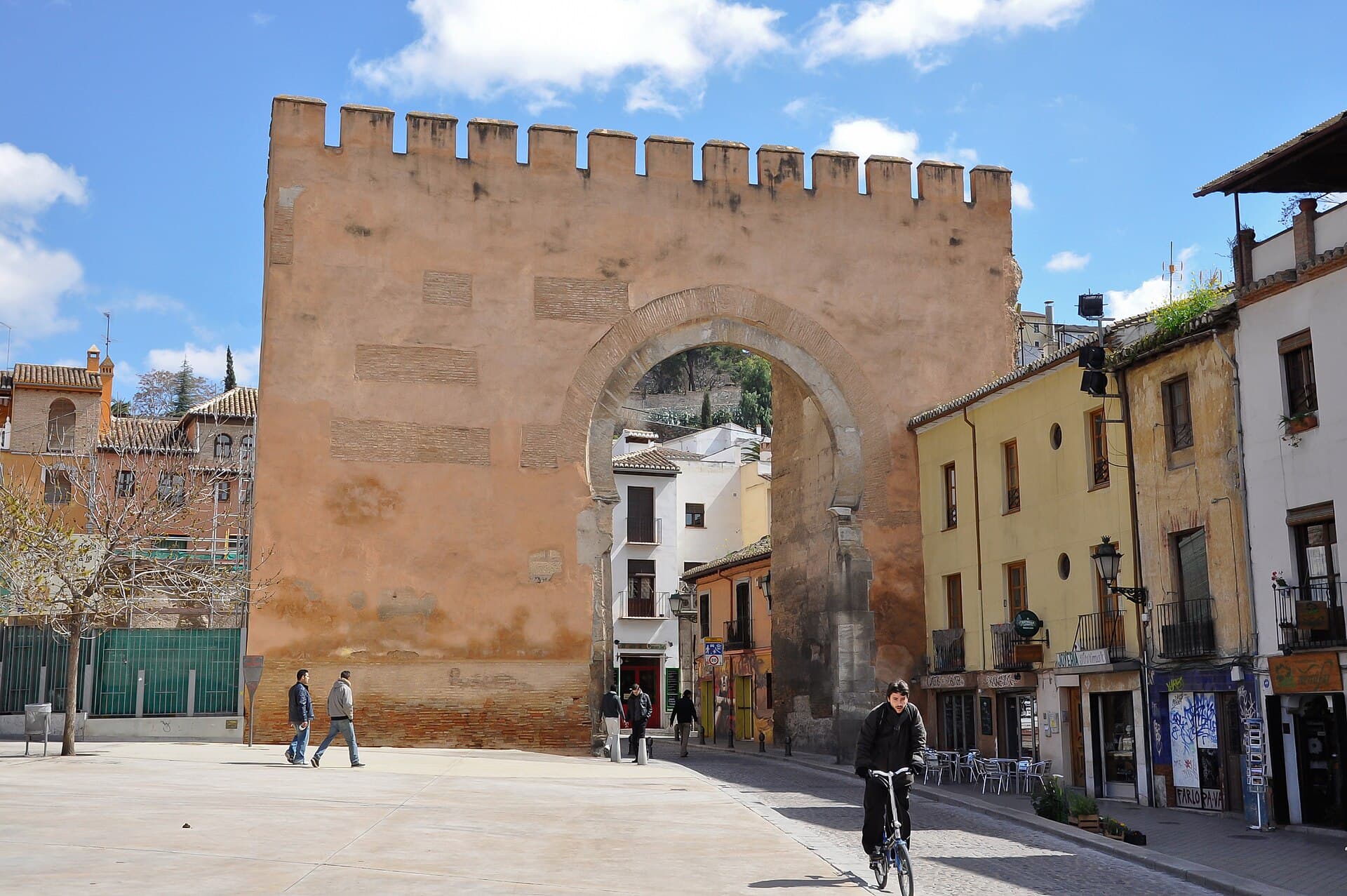 Puerta de ElviraThe Puerta de Elvira is a massive stone arch that was the main gate of Muslim Gr2 minutes walk4.4
 Sacromonte Caves MuseumSacromonte is the legendary gitano mountain: here the Roma dug their cave homes 6 minutes walk4.6
 Mirador de San NicolásThe San Nicolás lookout is "the world's most beautiful sunset" by a testimony at6 minutes walk4.8
 The Grand Mosque of GranadaGranada's Grand Mosque is a standing historical event: the first congregational 6 minutes walk4.7
The Puerta de Elvira is far larger and better known, the main entrance to Granada from the northern road, its great arch still standing over the street. Puerta Monaita is smaller, older, and stands higher in the quarter. Both belong to the same wall and can be seen on one walk.
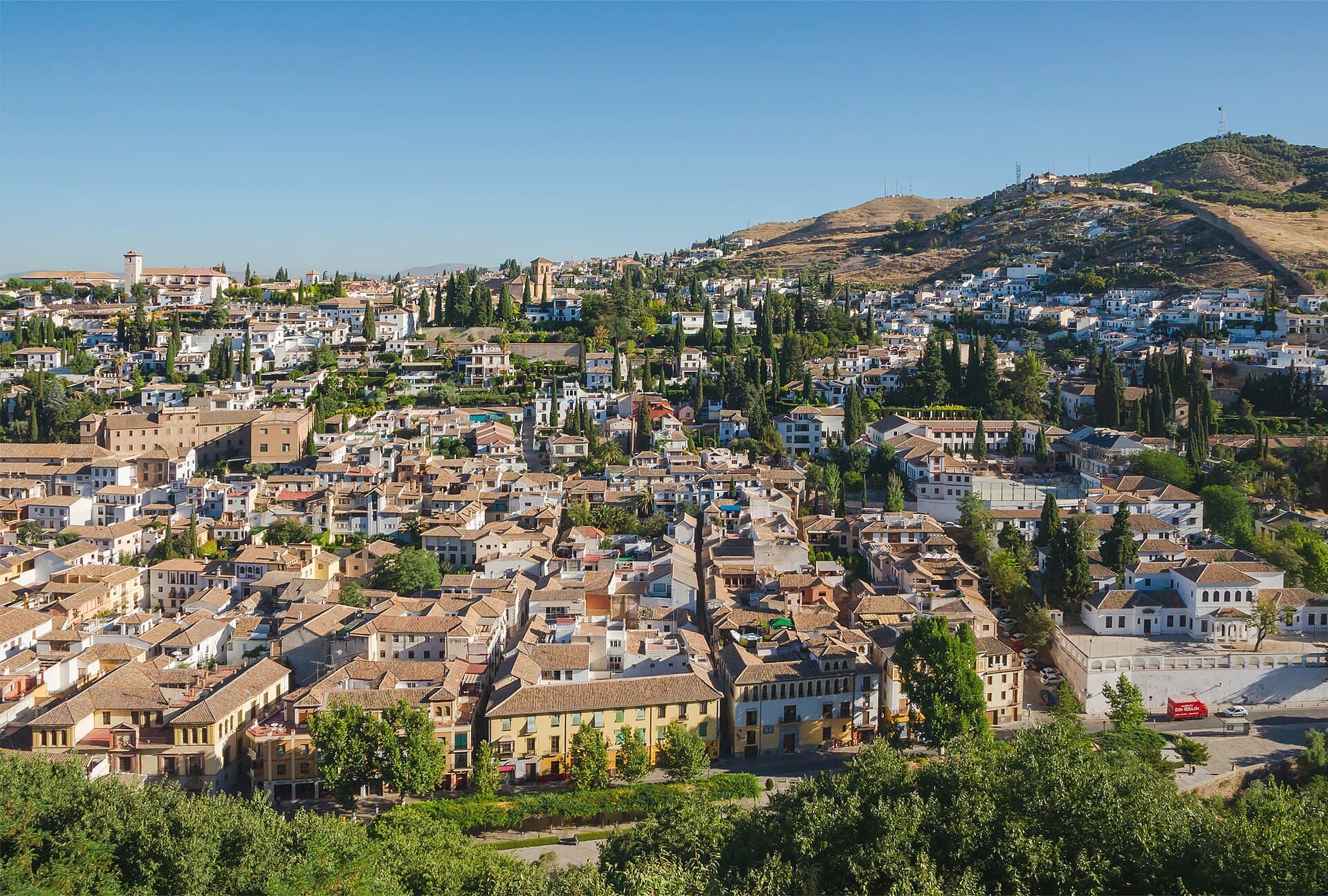
The quarter itself is UNESCO-listed: narrow lanes, houses round inner courtyards, churches built on mosques. Its best-known point is the Mirador de San Nicolás with its view of the Alhambra, free and crowded at sunset. The El Bañuelo Arab baths, also eleventh century, are close by.