
The nuns' hall
An unbroken fresco sky over the choir stalls — the hidden summit.
Óðinn — CC BY-SA 2.5 ca · Óðinn — CC BY-SA 2.5 ca · Photograph by Mike Peel (www.mikepeel.net). — CC BY-SA 4.0 · Casalmaggiore Provincia — CC BY-SA 4.0
Behind an unpromising grey front on Corso Magenta hides the "Sistine of Milan": a sixteenth-century church whose every centimetre of wall and vault was covered by Bernardino Luini — Leonardo's most graceful follower — his sons and their contemporaries, frescoes leaving no void, colours still burning after five centuries. The church is two halls: the public one in front and, beyond the painted screen, the cloistered nuns' hall — this was the church of Milan's greatest convent, its hidden nuns following mass through grilles in the dividing wall. The rear hall is the summit: wooden choir stalls beneath an unbroken sky of fresco. Entry is free — among Milan's most generous artistic gifts — and its neighbour in the same complex, the Archaeological Museum, keeps the Roman city wall and tower.
An unbroken fresco sky over the choir stalls — the hidden summit.
Leonardo's school at its most tender and sweet.
The openings through which the cloistered watched the world — a story in a wall.
Corso Magenta 15, 20123 Milan
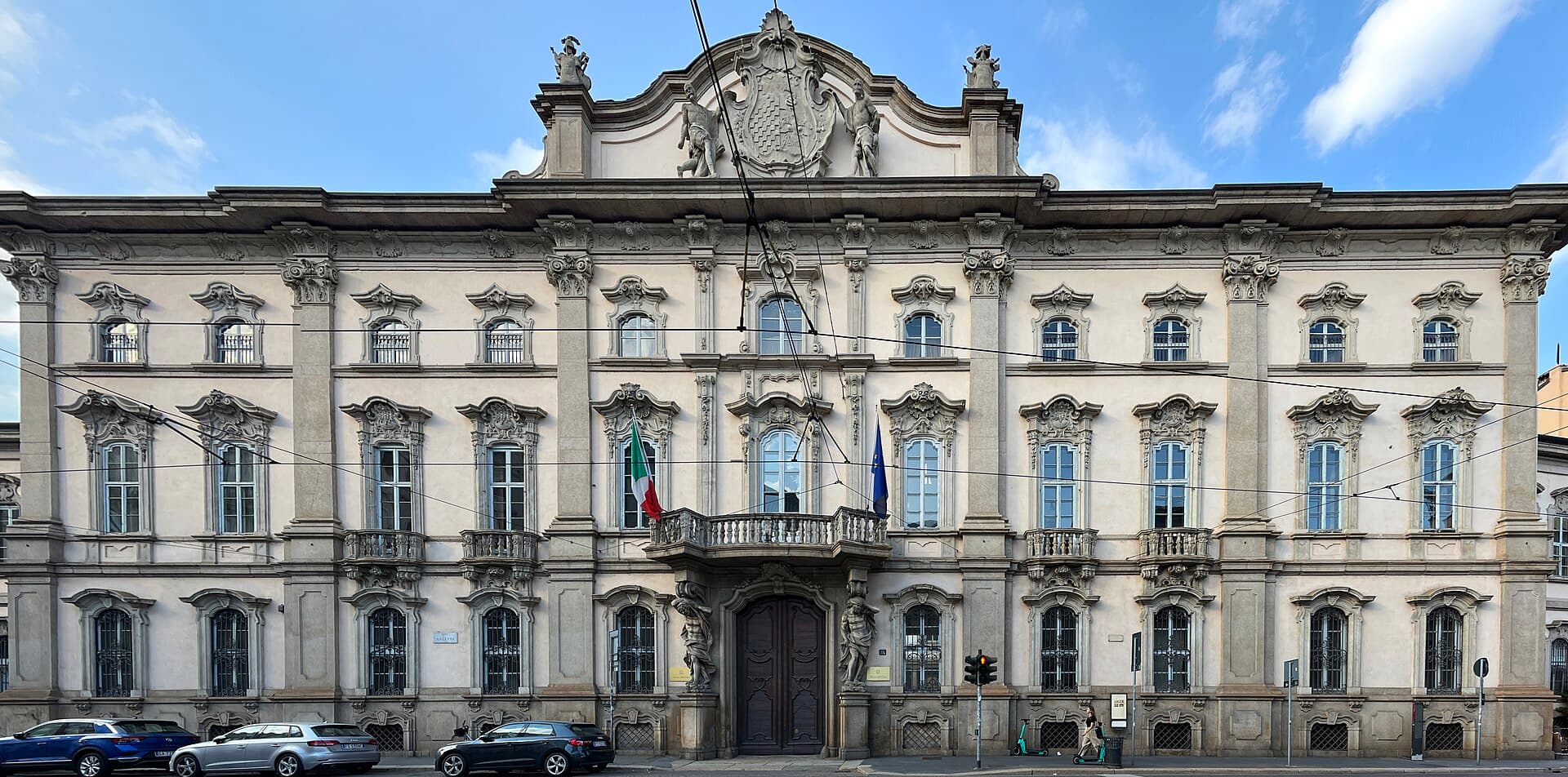 Palazzo LittaA seventeenth-century palace on Corso Magenta west of central Milan, its undulat1 minute walk4.5
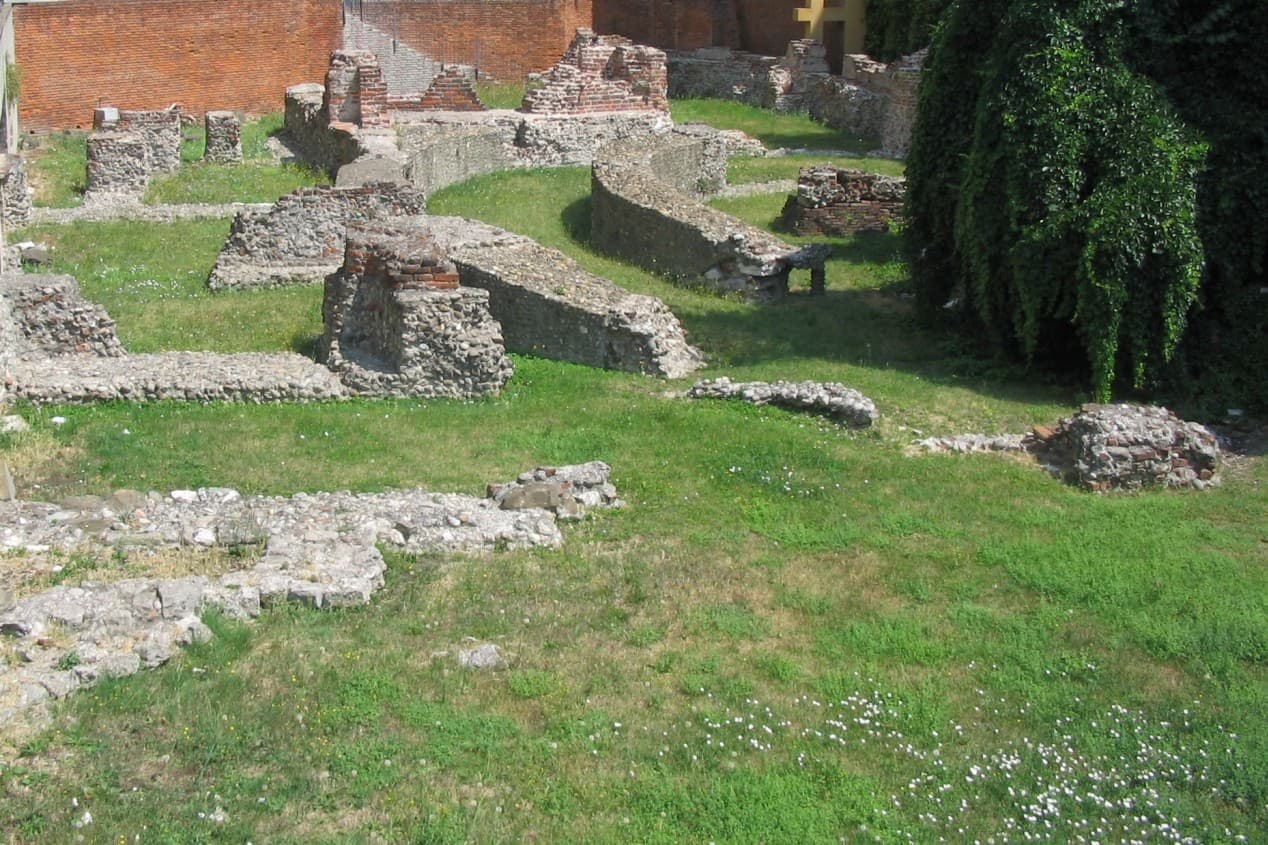 Roman Imperial PalaceThe remains of the Roman imperial palace in Milan, low ruins below street level 2 minutes walk4.5
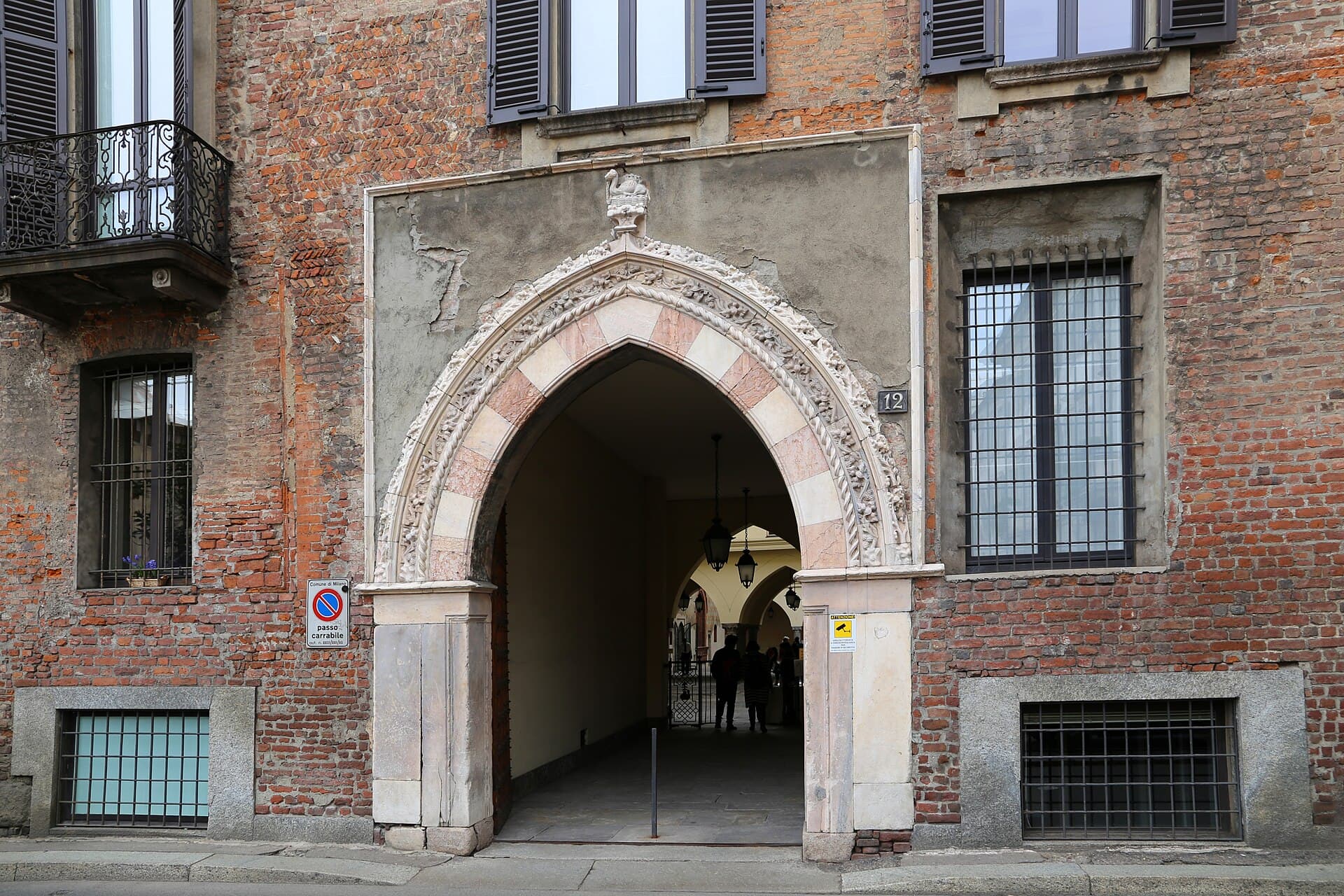 The Palazzo BorromeoA fifteenth-century palace on a small quiet square in central Milan, among the f4 minutes walk4.2
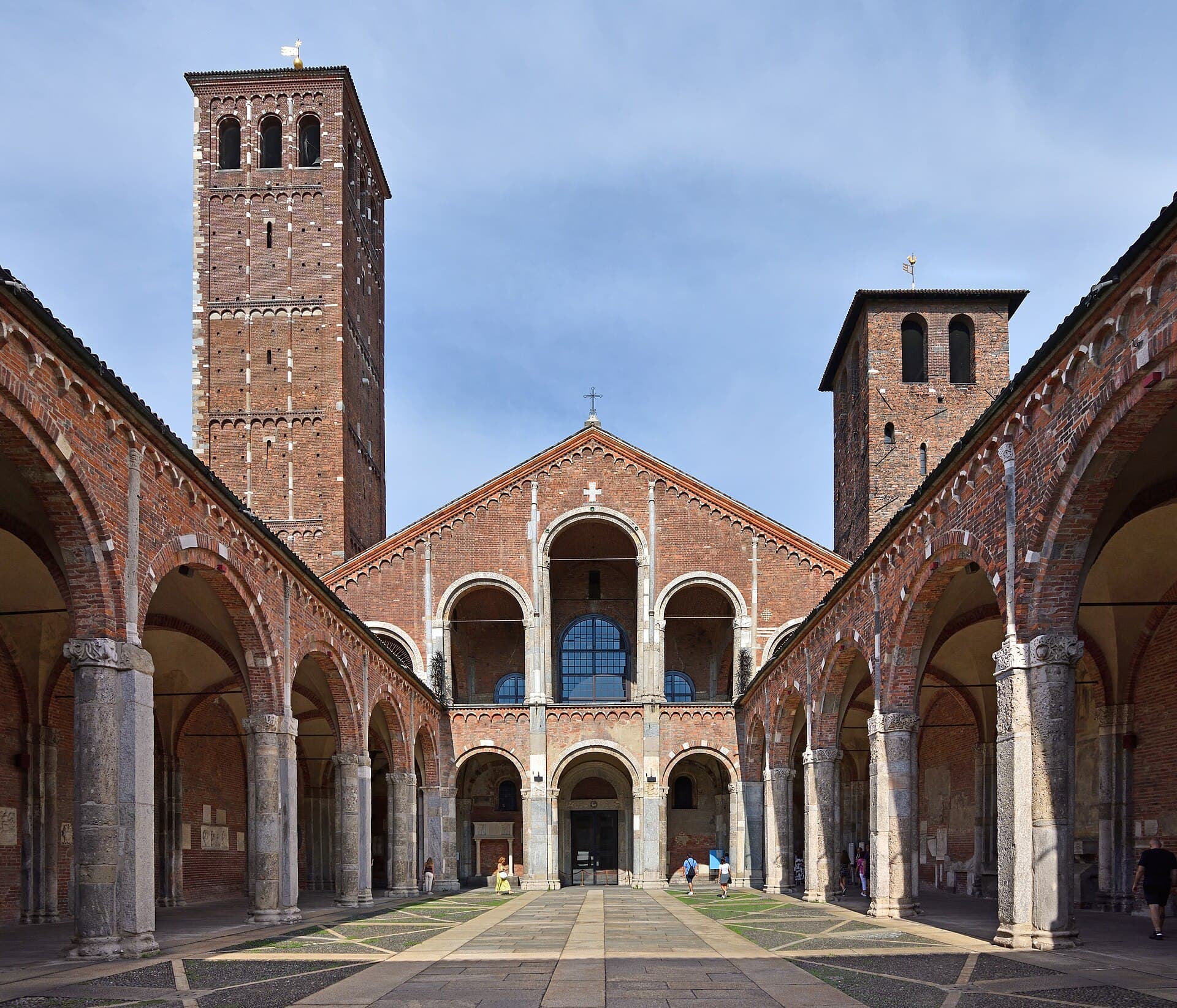 Basilica of Sant'AmbrogioBeneath the high altar, behind the glass of a silver casket, three men lie side 5 minutes walk4.6
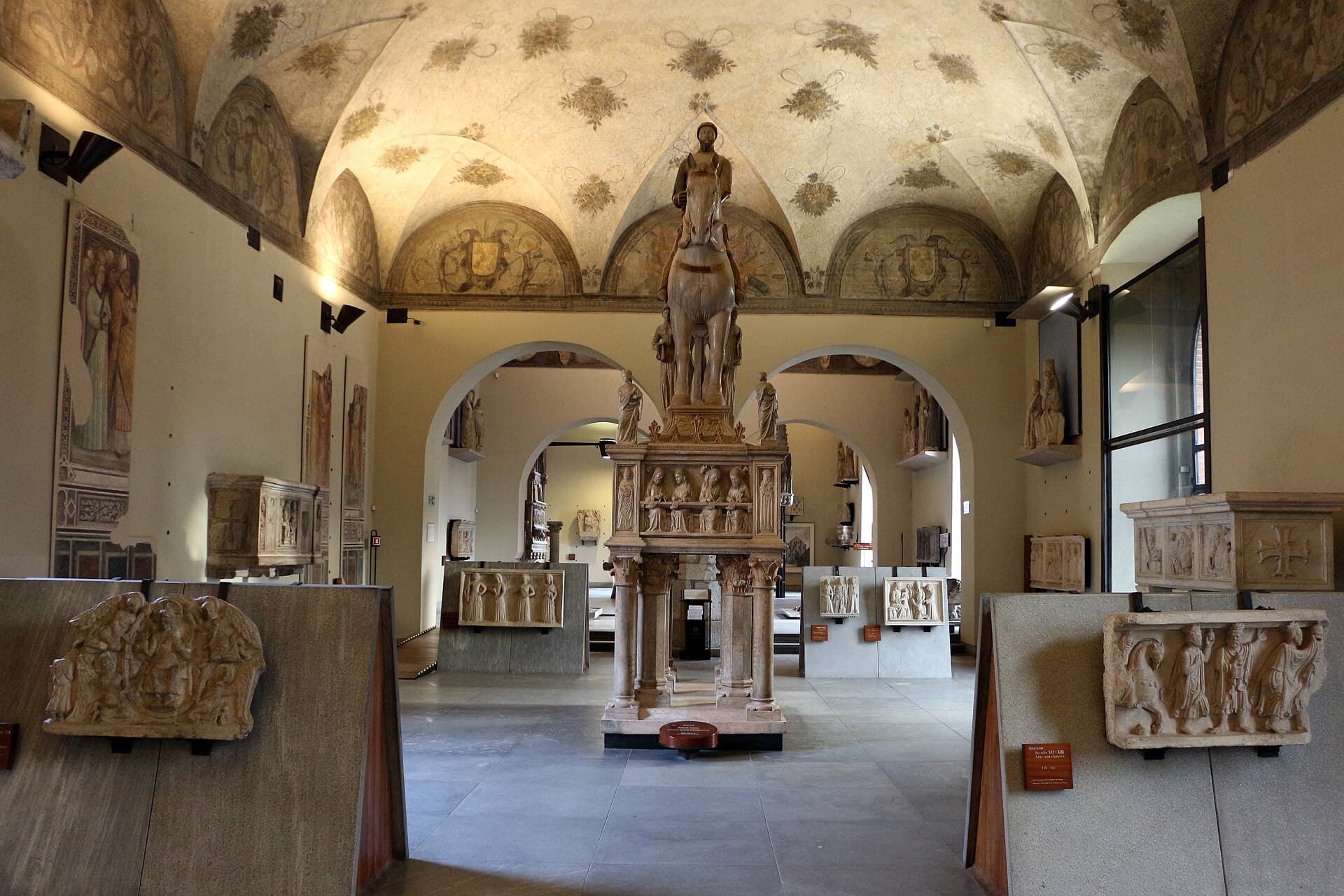 Museum of Ancient Art, Castello SforzescoIn a bare stone hall that was once a ward of a Spanish military hospital stands 7 minutes walk4.6
Because its front disguises itself as an ordinary building, no ticket advertises it and no queue betrays it — leaving it to the knowing and readers of good guides. That is half its magic: from a plain street into a total explosion of colour, nearly alone.
One rule: the first hall is the overture, so do not fill up on it — pass the small door right of the altar into the nuns' hall where the essence waits, and look up long. Then return and read the first hall better.
It sits nearly on the Last Supper's own route — sequence them and Corso Magenta becomes Milan's richest artistic kilometre. The Archaeological Museum adjoins, for lovers of Roman Milan.