
An imperial garden
Laid out in the Dutch Baroque style Peter the Great preferred.
CC BY-SA 2.5 · Vcohen — CC BY-SA 4.0 · Vcohen — CC BY-SA 4.0 · Olgerts V — CC BY-SA 4.0
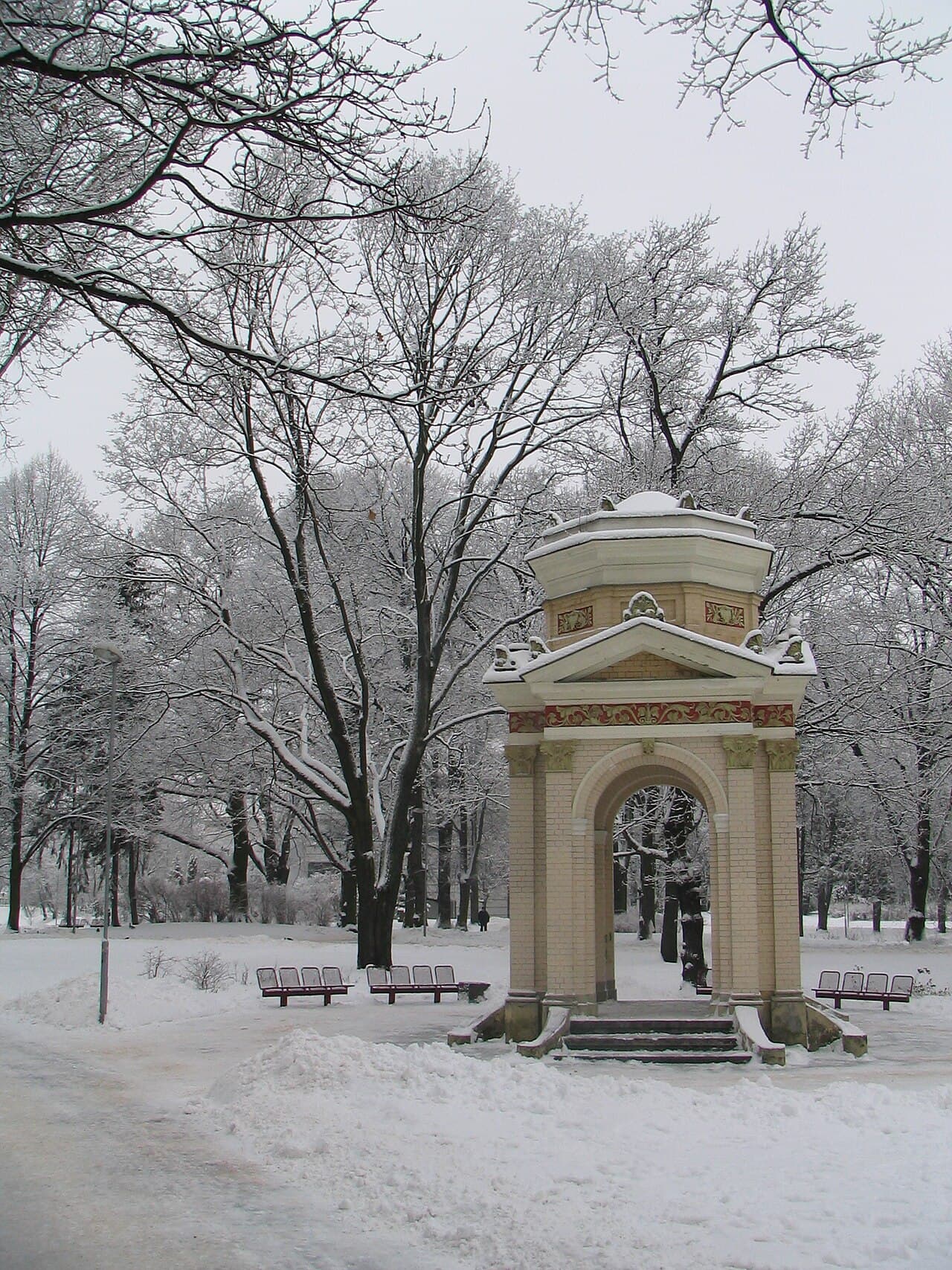
Riga's oldest public garden, laid out in the early eighteenth century on the order of Tsar Peter the Great after Russia took the city. That origin is what makes it interesting. The garden was laid out in the Dutch Baroque style Peter favoured, and local tradition holds that he planted a tree in it himself. It began as an imperial garden and later became public, and its name changed repeatedly as the rulers of Latvia changed — a pattern that repeats in every Baltic city. The garden today holds the Victory Gate raised to mark Alexander I's entry into Riga, an open-air summer theatre, and quiet wooded ground. The garden is not a tourist destination, and that is deliberate in listing it: it is a quiet space at the edge of the visitor route, used by residents, minutes from the green belt and the Art Nouveau district. Practical points: free and always open. Combine it with a green belt walk rather than treating it as a destination.
Laid out in the Dutch Baroque style Peter the Great preferred.
As in every Baltic city, names shift with whoever governs.
Raised to mark Alexander I's entry into the city.
North of the old town, Riga
 Kronvalda ParkA public park north of the old town running along both banks of the Riga canal, 6 minutes walk4.8
 The Corner House (KGB Building)Latvia's most feared address: the Corner House, an elegant Art Nouveau building 9 minutes walk4.4
 The Freedom MonumentThe symbol Latvians guarded with their eyes for fifty years: the Freedom Monumen10 minutes walk4.6
 The Art Nouveau District and BastejkalnsThe city with more Art Nouveau than any other on earth: a third of central Riga'10 minutes walk4.8
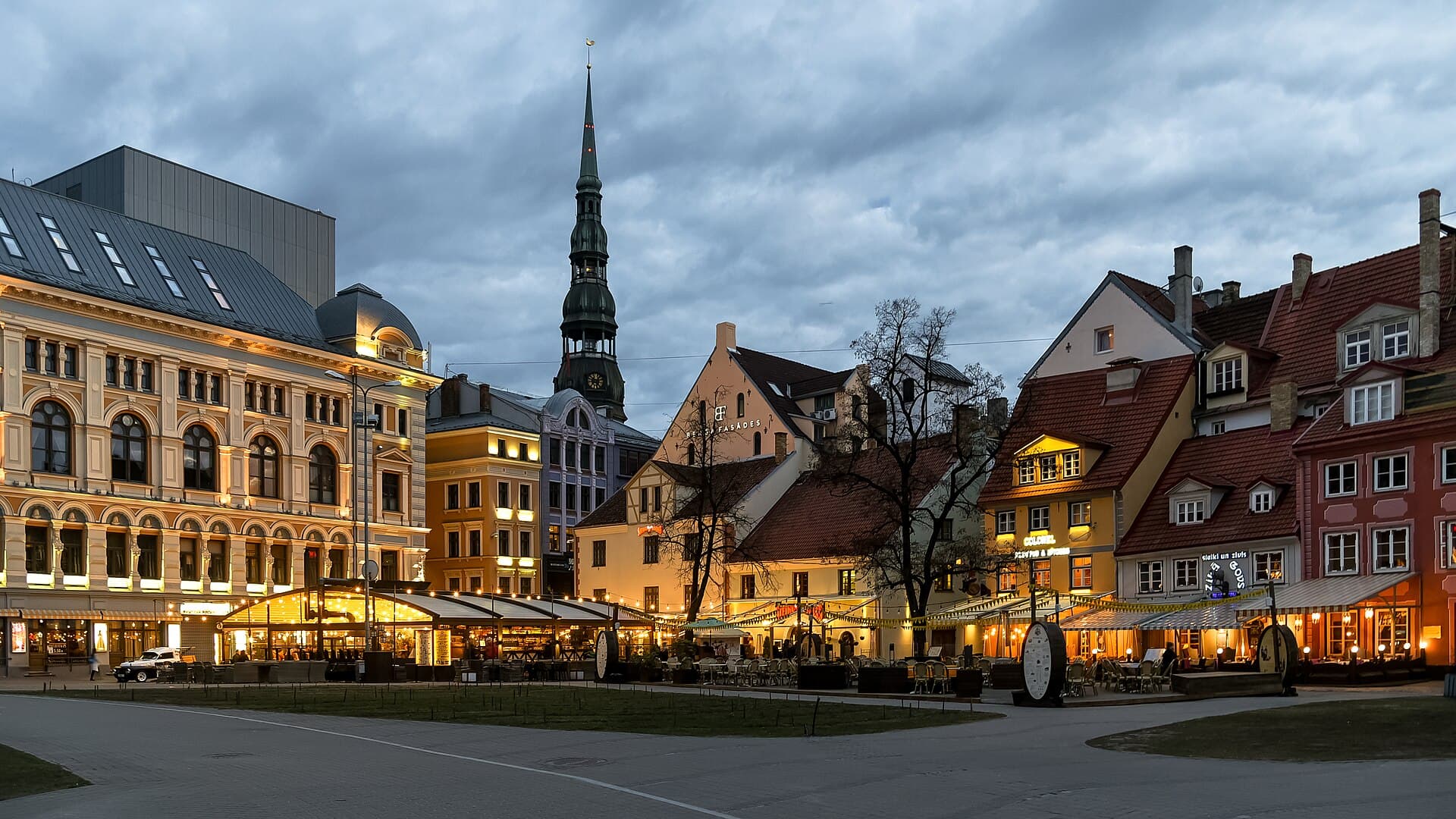 Līvu SquareAn open square in the heart of Riga's old town, ringed by cafés and restaurants 13 minutes walk4.5
Because these countries were ruled by a long succession of powers: Sweden, then imperial Russia, a brief interwar independence, Soviet and German occupation, Soviet rule again, then independence in 1991. Each regime renamed the streets, squares and parks after its own heroes. Today's names are mostly post-1991, and many are restorations of pre-1940 ones.
It is not a monument and does not rival the green belt for beauty. It is listed because it is the city's oldest garden and genuinely quiet, useful to anyone staying several days who wants away from the old town crowds. On a single day in Riga, skip it.